

If this is your first time here...
Welcome.
Before you read another essay.
Before you decide whether any of this resonates with you.
I’d like to offer you one thought.
What feels like personality may have a history.
You know how to move differently depending on the room you’re in.
At work. At home. In a relationship. With family. With friends.
You know what is expected of you.
You know how to read a room.
You know when to lead, when to soften, when to hold something, when to handle it yourself.
Some of those ways of moving may serve you beautifully.
Some may be so familiar you no longer notice the adjustment.
Not because they are false.
Not because there is a more authentic version of you hiding underneath them.
Because adaptation can become so familiar that eventually, we can no longer tell where it ends and choice begins.
That is where my work begins.
Not with another identity to become.
Not with another version of yourself to perform correctly.
With recognition.
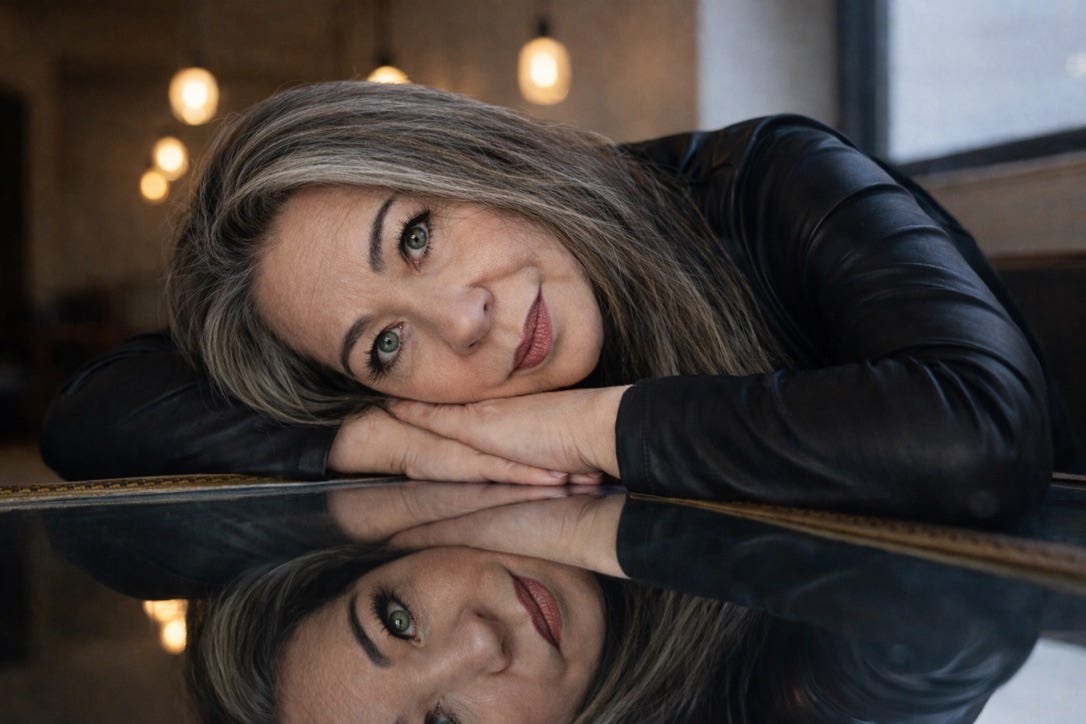
The Identity Era™
The Identity Era™ began with an observation I couldn’t stop turning over.
A woman can build an extraordinary life while becoming extraordinarily skilled at adapting to it.
She can build a business.
A career.
A reputation.
A family.
Relationships.
A life she genuinely values.
And throughout that life, she learns.
What belongs here.
What gets rewarded.
What keeps things moving.
What other people need from her.
What she can carry.
What she can become exceptionally good at.
None of that makes what she built false.
None of it means the adaptations were mistakes.
They may have been intelligent.
Necessary.
Useful.
They may still serve her beautifully.
But what happens when a way of moving becomes so familiar she no longer recognizes it as a way of moving?
What happens when adaptation begins to feel like personality?
When repetition begins to feel inevitable?
When something she learned to do becomes difficult to distinguish from something she is?
That is Architecture of Identity™ territory.
And that is the territory I write about here.
What I Have Come to Believe
I didn’t arrive at this work through theory alone.
I arrived here by listening.
Watching.
Living.
And noticing the same kinds of movements long before I had language for them.
Here is what I have come to believe about women, identity, and what it costs when adaptation becomes so familiar we can no longer tell where it ends and choice begins.
A woman does not need to reject everything she learned in order to recognize it.
Adaptation is not evidence that something went wrong.
Something can have a history without becoming a problem to solve.
Success can tell us what worked without telling us everything about what participated in making it possible.
Recognition does not require immediate change.
Seeing an adjustment does not mean she has to stop making it.
Context matters.
Conditions matter.
The room matters.
And something that once happened automatically can become something she consciously chooses to keep.
That distinction matters to me.
Because I am not interested in giving women another identity to perform.
I am interested in what becomes possible when more of what has been participating becomes visible.
Everything you’ll find here grows from that inquiry.
Every essay.
Every observation.
Every conversation.
Different rooms.
Different conditions.
Sometimes, there it is again.
Where to Begin
If you’re new here, I’d begin with your Recognition Signal™.
Discover Your Recognition Signal™
It isn’t a personality test.
It isn’t designed to tell you who you are.
It reflects some of the ways you may have learned to move through the rooms of your life, including what may have become familiar enough to disappear into the background.
You may recognize something immediately.
You may simply find language for something you’ve noticed before.
Either is enough.
Because recognition does not decide what something means for you.
It changes what is available for you to see.
Welcome to The Identity Era™.
This is where I write about what becomes visible when we stop treating identity as a fixed answer and begin paying attention to how it was built.
— Raven